




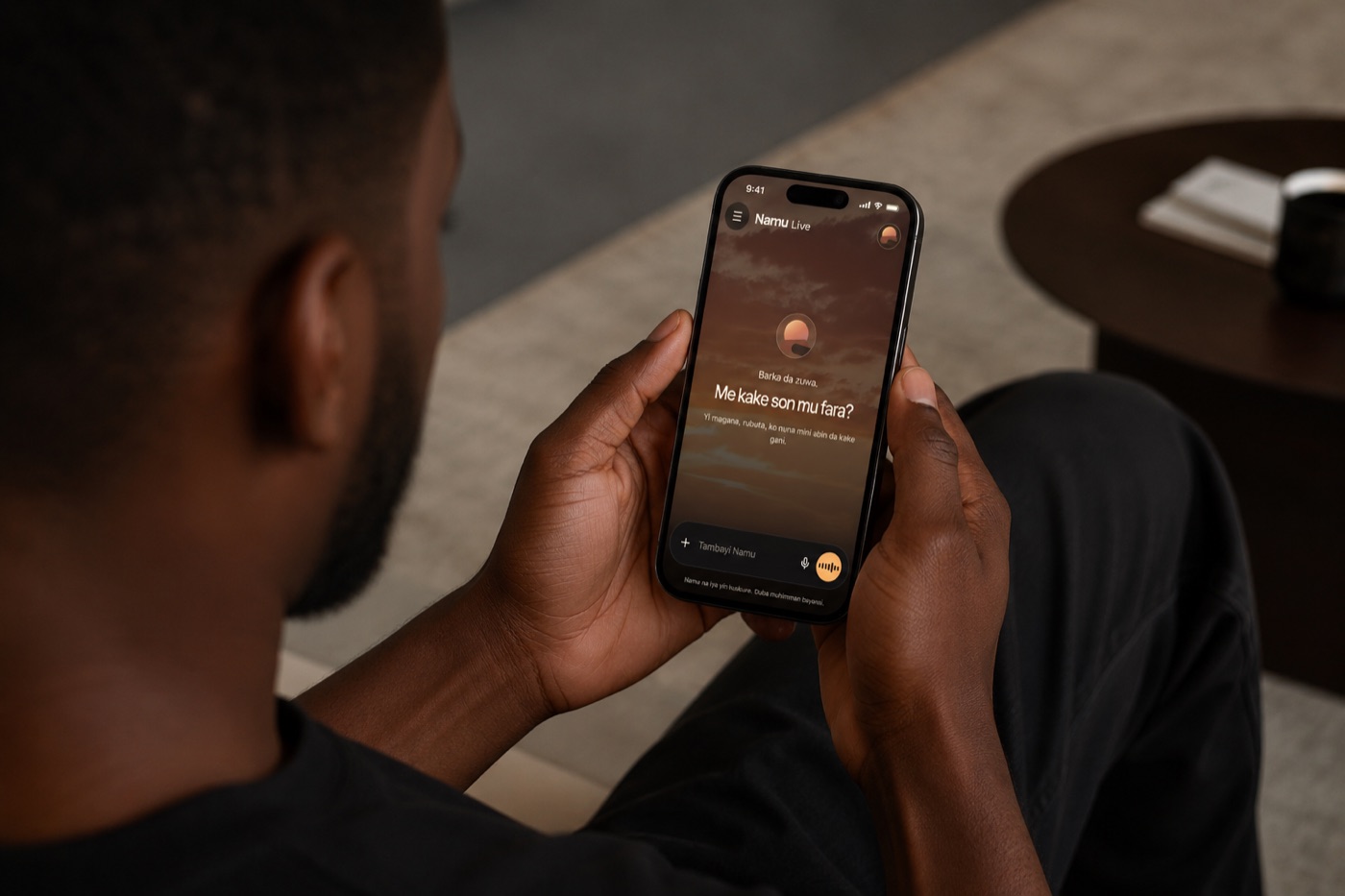




Most products are designed in English and localised afterwards. The process feels neutral. It is not — by the time translation happens, decisions have already been made that no amount of translation can undo.
What gets baked in
Layout assumes English word length. Hausa is frequently longer, and buttons designed to fit an English label either wrap awkwardly or truncate.
Information hierarchy assumes an English reader's scanning habits, which are learned, not universal.
Empty states, error messages and onboarding — the copy that carries the most tone — get written last and translated fastest, which is precisely backwards.
Designing the other way round
We write the Hausa first and let the interface accommodate it. Where a label runs long, the component adapts rather than the language being compressed to fit.
This has a side effect worth naming: it makes the English better too. Copy that has to survive being written in Hausa first tends to be plainer and less idiomatic, which travels further.
None of this is expensive. It is almost entirely a question of what order you do things in.